

 Here in the US, consumerism has evolved to reach scales of excess that most cannot even imagine. Most people go about their day, making trash, flushing toilets, and throwing away food without any second thought of how this post consumer waste is managed. Frankly, once the trash man takes it away, it is out of sight, and out of mind.
We ocean enthusiasts can at times be sensitized to images of plastic garbage on coral reefs, a large marine mammals drowned by garbage, and of course bioaccumulation of various toxins within critters higher up the food chain. The intrinsic beauty of the ocean is a stark contrast to these issues of pollution and waste, so it certainly makes for a compelling story.
Today, I got a unique glimpse of the other side. Now, I’ve done my fair share of contaminated water diving, but today was something special and it rolled all sorts of independently unique challenges together – a series of dives into an organic compost digester for a major national grocery store chain.
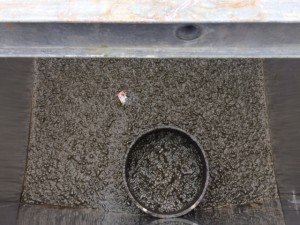
So, I learned that all of the food waste (less meat) from grocery store shelves, produce going bad, and scraps from pre-packaged prepared food come to this fine facility. It is ground up, pressed, filtered, treated, and introduced into my swimming pool for the day – a 40 foot deep organic compost tank where it continues to break down to a point where it can be repurposed as fertilizer. The other by-products include methane gas which fuels a turbine for electricity production, and plenty of heat.
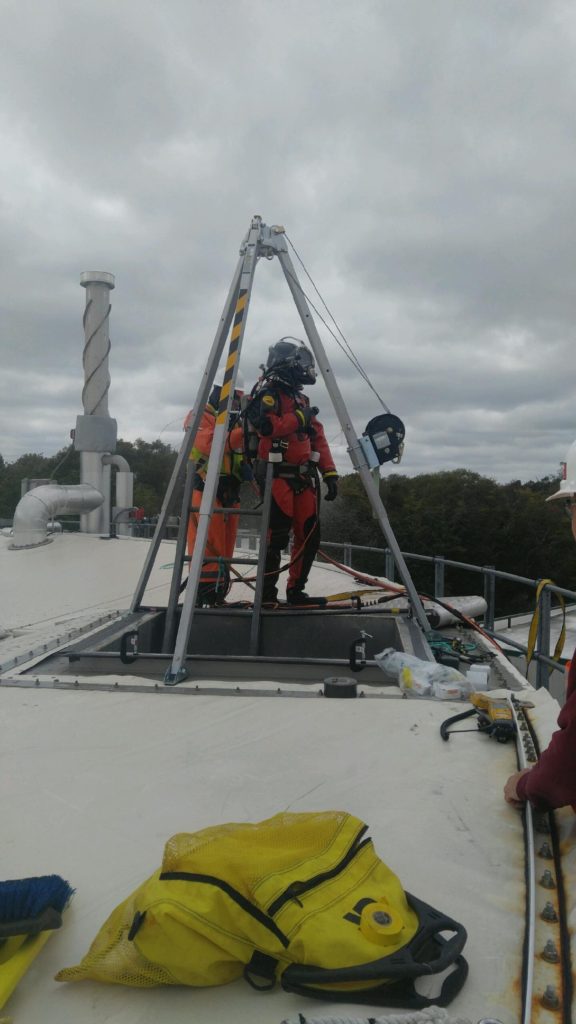
On one hand, it was fascinating to see that a big corporation was taking serious stock in recycling. On the other hand, I was baffled at just how much waste there was to manage to begin with. Surely, there must be a better way.
The problem: a leak. The solution: find and assess the source of the leaking system, and fix it. The challenge: confined space, blackwater, thick microbiological community, high concentrations of methane gas and carbon dioxide production by the microbes, and to top it all off, the water is 100 degrees Fahrenheit.
The thermal exposure was the real challenge. With even the slightest bit of exertion, I would overheat and be on the dangerous road to hyperthermia. We did a few simple tricks to aid in keeping me cool, but it was still brutal.
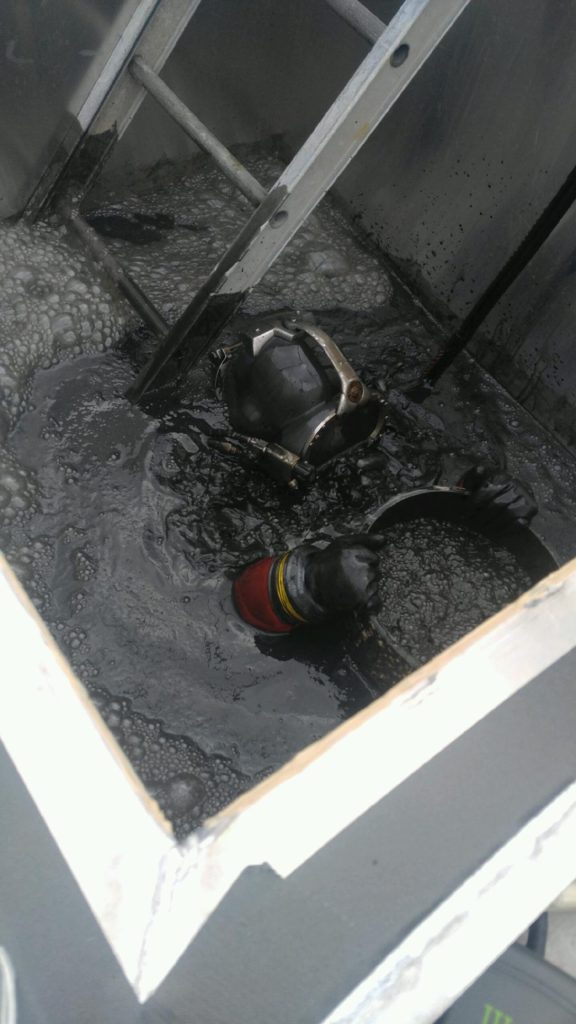
Anyway, I’m always up for a dive in a challenging environment, and this project illustrated why there will always be a need for divers. There was absolutely no other means to enter the space and work in zero visibility conditions and conduct the repair. THe only alternative would be to drain the system, which would be at huge expense in the loss of the microbial culture and its tightly regulated environment.
As exciting and challenging as the day was, I am still an advocate for going as green as possible and reducing the excess that makes these types of industrial facilities necessary. The United States food waste volume is massive compared to other countries. THere is much we can do – grow a garden, compost your own food scraps, avoid prepared and packaged foods, and of course shop smarter for better meal planning.
In the meantime, bring it on! No space is too small, no water is too nasty!