

 Set deep in the countryside of Wiltshire, England lies one of our greatest mysteries – the monument (maybe?) of Stonehenge. The Stonehenge site is most classically defined by the large standing stones set in a circular pattern, but is more expansive including remnants of carved earth, and various artifacts from throughout the site’s history of varying uses.
At the roots of the site is where the controversy lies – that is, when was the site constructed, and for what purpose? Archaeologists have long believed that the stone monuments were erected around 2500 BC. However, a recent theory suggests that the first stones were placed as early as 3000 BC. Evidence from recent archaeological studies suggest that Stonehenge served as a burial ground, with cremated remains found at the site dating from its earliest beginnings. The dating of cremated remains found on the site indicate burials from as early as 3000 BC.
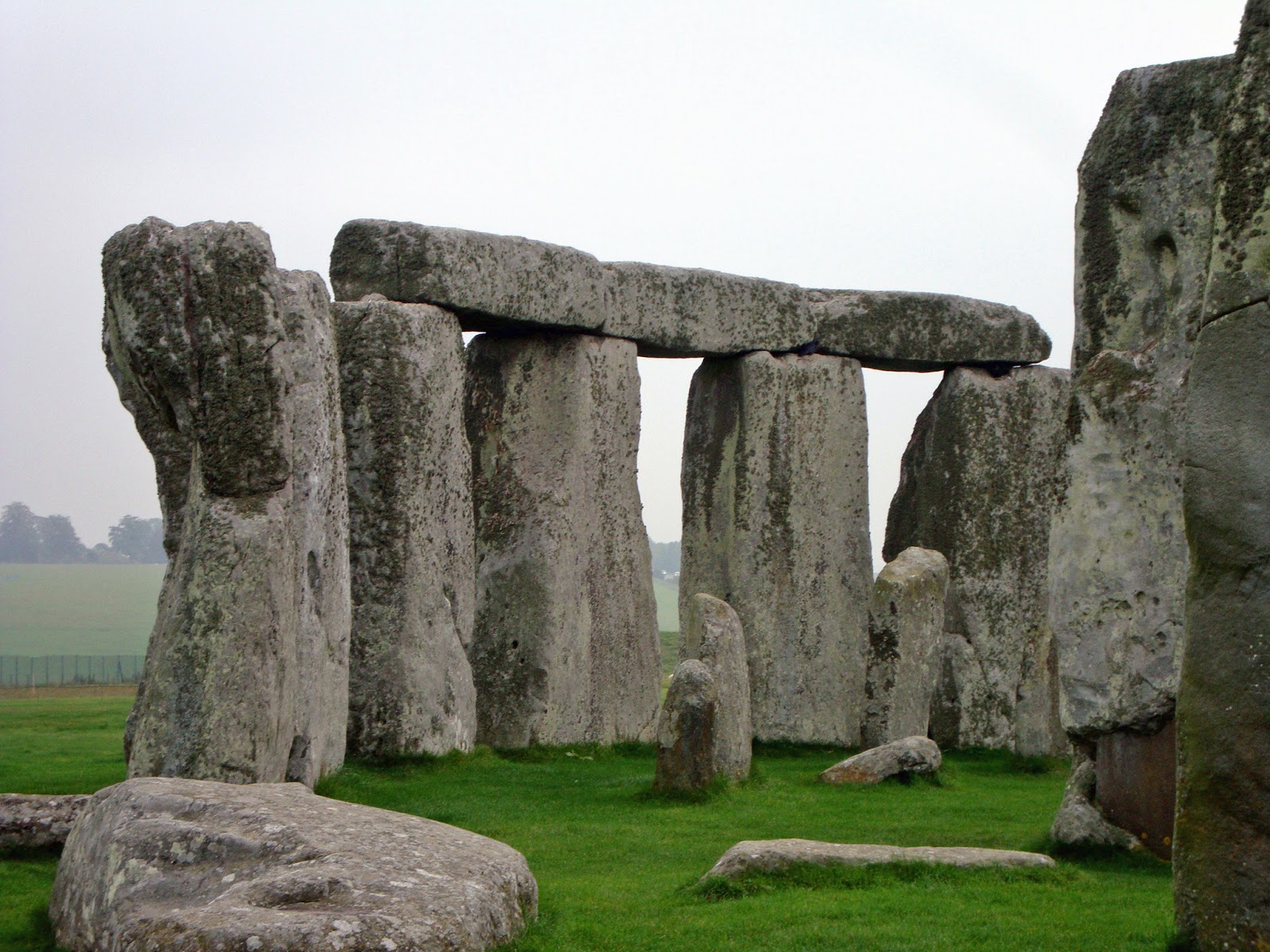 |
| Photo by Nancy Clark. |
One can explore volumes of literature on the subject, and what is most interesting is that there are unquestionably more questions than answers. The theories are endless, but what we can confidently presume is that Stonehenge was designed and constructed by an intelligent group of persons, and with purpose. Using crudely cut yet strategically placed stone, it may be that the people responsible for Stonehenge were not as technologically advanced as humans are today, but to go through this massive amount of work must have been for some good reason.
‘Monuments’ constructed throughout time often outlive those responsible for their construction. But in that day and age, to build something with such precision almost certainly served some greater function in the community. Again, the possibilities are endless, from some sort of calendar, to a celestial map, to a beacon for visitors from another world…
When we look back at the achievements of the human race, we have to consider this progress in the context of the time, which includes every factor of influence on the human race. Imagine if only we, today’s humans, dug deep into our psyche – and unleashed the deep and profound connectivity with our planet and ourselves that our ancestors had…just imagine.
Bottom line is that whoever was responsible, while not as technologically advanced as us, was certainly more psychologically advanced. This is largely due to a heightened awareness while out in the elements and trying to survive a much harsher state of existence than we have today while sitting behind out computer screens.

Even as our awareness shifts from the elements to digital spaces, platforms such as cacasinoca.com reflect how technology now shapes the frameworks of connection and experience.